


Business capabilities: A powerfull tool in your strategic planning
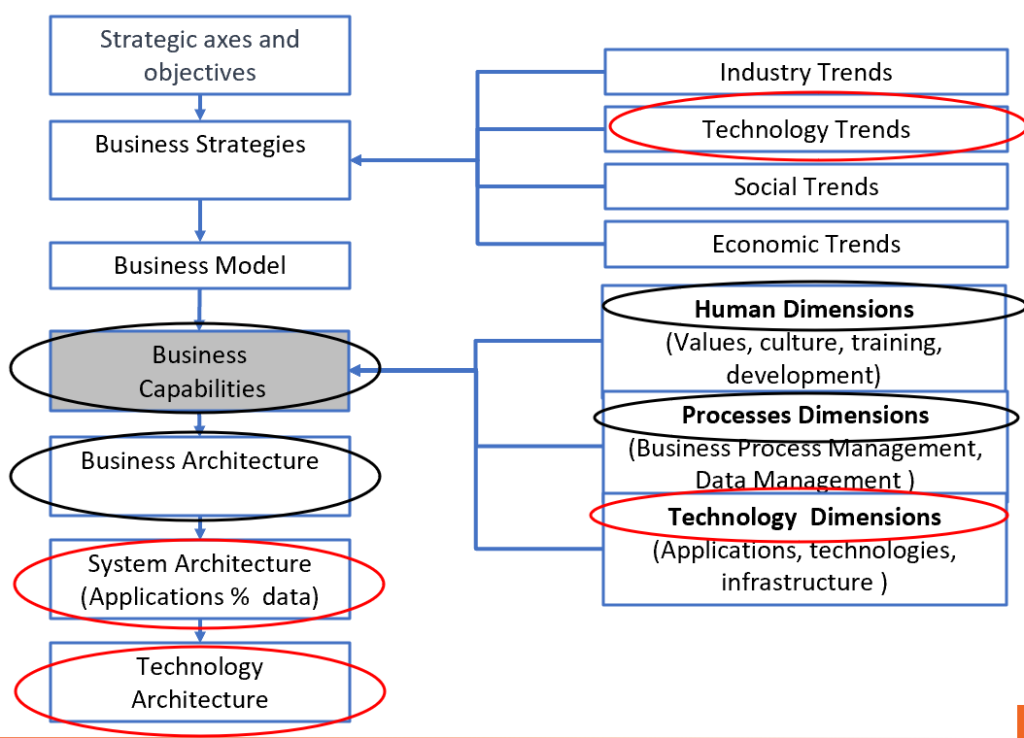
Figure 1 – Business capabilities roles in Strategic planning
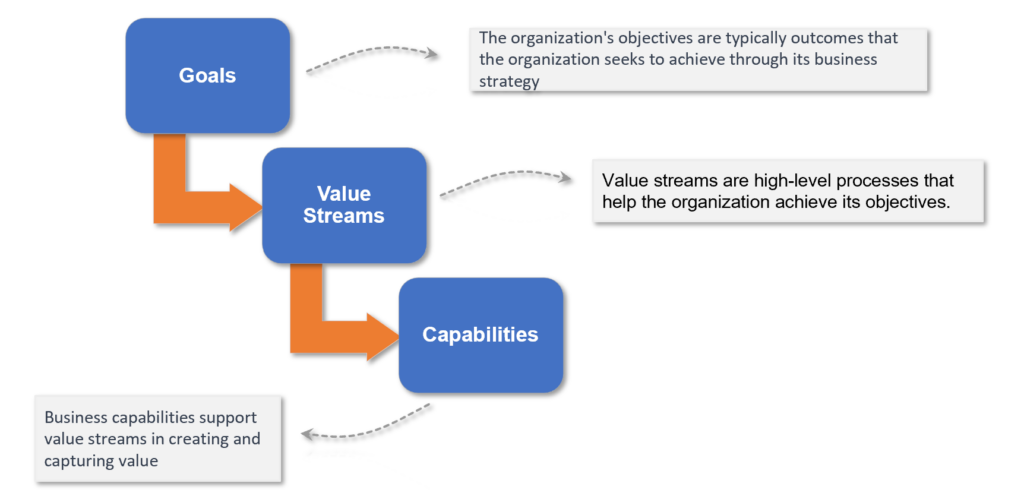
Figure 2 – Value streams and Business capabilities
Business capability modeling should identify both current capabilities and new future capabilities to be implemented in relation to the organization’s new objectives and strategic axes. This modeling will also identify the links with the organization’s system and technology architecture.
Technological trends and disruptive innovations can also help identify new business capabilities and influence and enrich the business model. For example, for a manufacturing company, mastering additive manufacturing technology (“3D printing”) can bring a new differentiation business capability.
The following diagram shows business capability modeling at the junction with other business architecture modeling techniques or formalisms (Source: Trisotech).
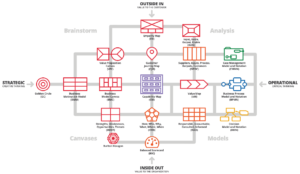
The characteristics of a business capability model are as follows:
- It covers the entire enterprise with cross-functional units and functions.
- It is a common language to standardize communication across the enterprise.
- The purpose is to describe what the enterprise does without going into the details of how it is done.
Here is an example of a business capability model for a manufacturing company:

Note: We recommend using different layers with color codes to classify capabilities, identify their maturity state, prioritize work, etc.
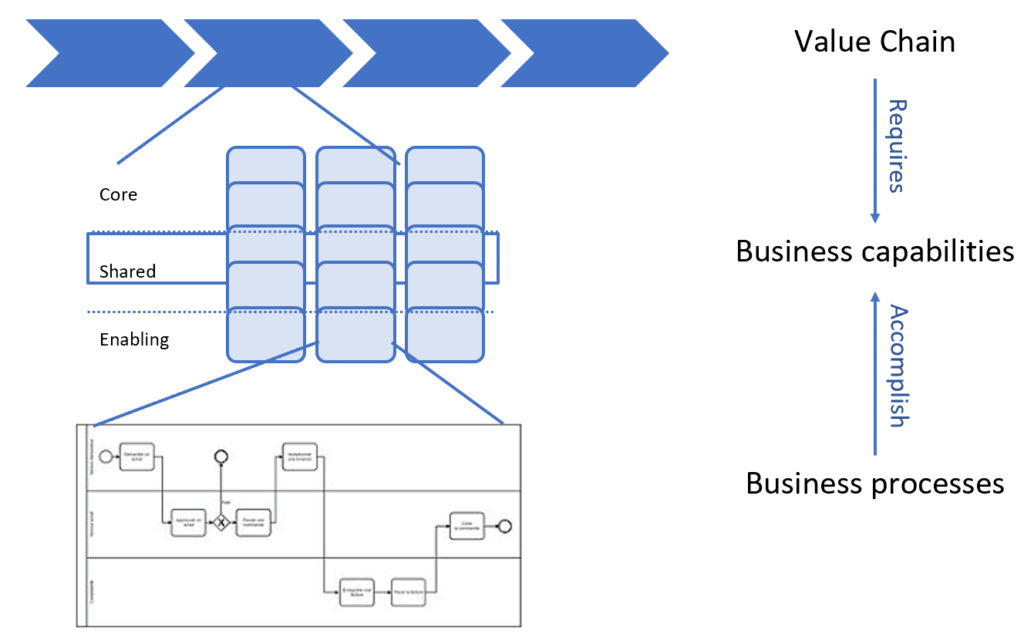
Although capabilities may be confused with business processes, they are different components of a business. Capabilities define what needs to be done while processes describe how capabilities are executed.
At the higher levels, they may be very similar. Process models are dynamic, with continuous improvements evolving over time, while capabilities remain stable. Business processes reveal how business is done at a given time. Capabilities, on the other hand, are stable, concise, and change little.
Capability provides a more stable view of the business to management compared to a process view. In summary, capabilities orchestrate the different processes that implement them.
Business capabilities can also be classified in different ways to give strategic meaning to each of the organization’s capabilities. The diagram above shows a typical “Strategic-Control-Execution” classification.
Our article “How to classify Business capabilities“ presents another way to classify business capabilities.
Connect business processes to the business capability model.
The EA (Enterprise Architecture) function must link the high-level process view to the business capabilities to enable impact analysis across interdependencies. The most obvious way is to map higher-level process areas into at least one of the targeted business capabilities. It is often convenient to use the value chain model to demonstrate the links. The EA will also link each business capability to other architecture views in addition to processes, such as data, applications, and technologies.
In conclusion, business capabilities are a fundamental element that enables and supports business and digital transformation initiatives that companies undertake to remain competitive in an ever-evolving market. Companies that excel in mapping their existing capabilities and creating a roadmap to bridge the gap in their future capabilities are most likely to stay ahead of the competition by effectively responding to industry and market dynamics.
The activity of connecting the high-level strategic priorities and objectives of the company to resources, processes, and the system landscape is in itself an important business capability for your organization. This capability is called enterprise architecture. Your CIO should play an important role in raising awareness and operationalizing this capability in a relevant way for your organization.